
Related terms people compare
- quotation format
- quote maker
- estimate generator
- business quotation template
- quote to invoice workflow
Guide
A quotation is an offer: it tells the client what you will supply and at what price, before any work is done. An invoice is the bill you raise once you supply, and in GST terms only the tax invoice records the tax you owe and lets a registered buyer claim input tax credit. Use the quote to agree the numbers, then carry the same numbers onto the invoice.
A quotation is an offer: it tells the client what you will supply and at what price, before any work is done…

A quotation is a priced offer sent before the work; an invoice is a demand for payment raised at or after…
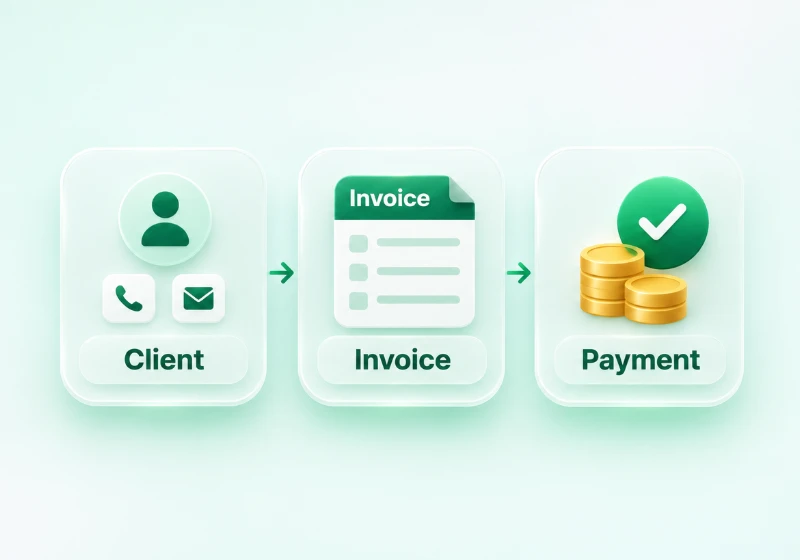
Write the quotation with your business name, GSTIN if registered, the client’s details, a quote number and…
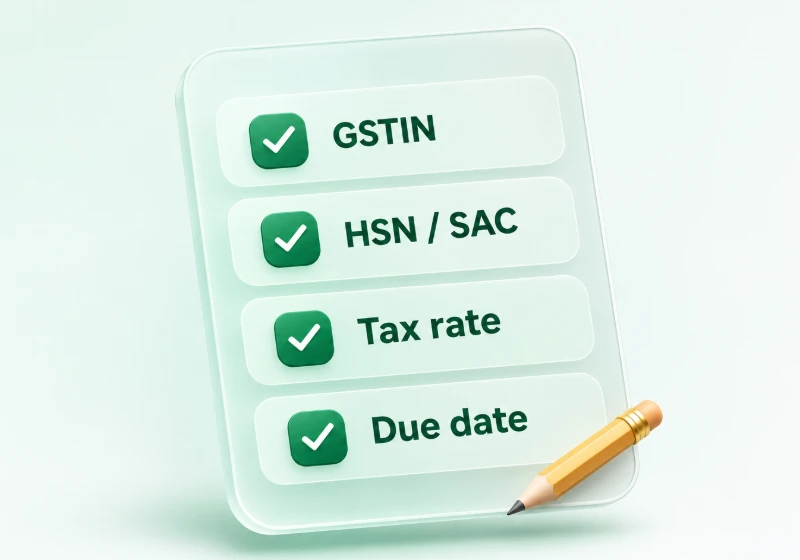
A useful quotation invoice format should help you move from question to usable format quickly. Start with the business context, recipient details where relevant, dates, amounts, taxes, terms, and the next action. For everyday work, this keeps quotation vs invoice: what changes when the client says yes clear enough for freelancers, agencies, consultants, and small teams without rebuilding the workflow every time.
| What to check | Why it matters | InvoiceGennie flow |
|---|---|---|
| Format requirements | The right fields make the layout easier for clients, finance teams, and tax records. | Compare the field structure, then move into a matching generator when ready. |
| Review fields | Correct identity, amount, and tax details avoid back-and-forth later. | Use related tools and examples to keep the next step consistent. |
| Workflow next step | One-off documents are useful, but tracking matters once volume grows. | Move to the dashboard when you need saved records and follow-ups. |
In 2026, buyers expect billing workflows to be fast, readable, mobile-friendly, and easy to revise. Write the quotation with your business name, GSTIN if registered, the client’s details, a quote number and the date. If you use this quotation invoice format once, keep the output simple. If you repeat the same workflow every week, save clients, standardize terms, and track follow-ups in one workspace.
The fastest path is to use the quotation invoice format above, use the format, and move into InvoiceGennie when you need saved clients, reminders, payment tracking, and cleaner billing records.
These four documents usually follow one deal in order. The difference between them is what each one commits you to, and which one GST treats as the record of supply.
GST law asks a registered supplier to issue a tax invoice for every taxable supply. It also names a receipt voucher for advances and credit or debit notes for later changes. Quotations, estimates and proforma invoices are commercial documents. They are useful, but none of them takes the place of the tax invoice.
There is no prescribed quotation format, but it helps to use the same fields your tax invoice will need. Then the invoice is a copy of the quote rather than a rewrite. That keeps the client from seeing different numbers and keeps your GST figures consistent.
A web designer in Pune quotes a client, also in Maharashtra, for a small business website. Supplier and client are in the same state, so 18% GST is split into 9% CGST and 9% SGST.
Quotation QT/2026-27/014, dated 5 October 2026, valid until 20 October 2026: website design and build, 1 × ₹35,000 = ₹35,000; content pages, 10 × ₹1,500 = ₹15,000. Taxable value ₹50,000. CGST 9% ₹4,500. SGST 9% ₹4,500. Total ₹59,000. Terms: 50% before work starts, balance on handover.
The client accepts on 8 October. For services, GST becomes payable on an advance as well, so when the ₹29,500 advance arrives the designer issues a receipt voucher for it (₹25,000 taxable value plus ₹2,250 CGST and ₹2,250 SGST) rather than waiting for the final invoice.
The site is handed over on 30 October. Tax invoice INV/2026-27/031, dated 30 October 2026, reference QT/2026-27/014: the same two lines, ₹35,000 and ₹15,000. Taxable value ₹50,000. CGST 9% ₹4,500. SGST 9% ₹4,500. Invoice total ₹59,000. Less advance received ₹29,500. Balance due ₹29,500.
Only three things changed between the quote and the invoice: the document title, the number and the date. The line items, rates, tax and total did not. If the client had been in Karnataka, both documents would show IGST 18% of ₹9,000 instead of the CGST and SGST split, and the total would still be ₹59,000.
Most mistakes happen when the invoice is typed again from scratch: a rate changes, a line is missed or the GST is rounded differently. Copy the accepted quote line by line instead, and change only the document type, number and date.
If the scope changed after acceptance, send a revised quotation first and get it accepted, then invoice that version. That way every figure on the invoice can be traced to something the client agreed to.
For services, issue the tax invoice within 30 days of completing the work. For goods, issue it before or at the time of removal or delivery. InvoiceGennie converts an accepted quote into an invoice in one click with the same figures, and gives it the next number in your invoice series.
No. A quotation is an offer, not a document of supply, so sending one creates no GST liability. You should still show the GST rate and amount on it so the client knows the full price. GST becomes payable at the time of supply, which for goods is broadly the invoice date and for services is the earlier of the invoice date or the date you receive payment.
No. A registered buyer claims input tax credit on the tax invoice (or another prescribed document such as a debit note). A quotation or proforma invoice does not qualify, which is why the final tax invoice must always follow.
A quotation is sent first, to win the work, and the client may still negotiate or reject it. A proforma invoice is usually sent after the price is agreed and before supply, often to collect an advance or for the client’s internal approval. Both carry the same kind of figures, and neither is a tax invoice.
GST law does not set a validity period for quotations, so it is your commercial choice. Many small businesses use 15 or 30 days. Keep it shorter if your material costs move quickly, and say clearly on the quote what happens after it lapses.
No. Keep quotations in their own series. A tax invoice needs a consecutive serial number that is unique for the financial year, so give the invoice its own number and mention the quotation number on it as a reference.
Use these linked tools to complete your billing and collections workflow.
Tool
Create quotations online with taxes, validity date, and line-item pricing. Ideal when you need a quotation and invoice generator in one clean workflow.
Tool
Create proforma invoices with taxes, quantity, and due dates. Ideal for pre-payment and order confirmation.
Tool
Create a professional estimate PDF online for free. Add client details, services, quantity, rates, tax, validity, notes, and download without signup.
Tool
Create GST invoices online with CGST, SGST, or IGST-ready totals, GSTIN fields, HSN or SAC-friendly lines, and downloadable PDF output for India billing.
Tool
Calculate GST inclusive and GST exclusive amounts with CGST/SGST or IGST split in seconds.
Practical guides that help teams execute invoicing and accounting workflows faster.
Guide
Understand invoice vs bill differences, when to use each term, and how payment workflows change in B2B operations.
Guide
See a practical GST invoice example with required fields, tax breakup, and formatting tips for Indian businesses.
Guide
Learn how to create a professional invoice with GST, payment terms, and due dates using a simple step-by-step framework.
Guide
What an invoice reference number is, how it differs from an invoice number, the GST rule (16 characters, unique per financial year) and formats you can copy.
Browse professional invoice, receipt and credit note templates.
Client-retainer and milestone invoice examples for agencies.
Structure winning quotes with terms, taxes and validity.
Use proforma formats before goods dispatch or project kick-off.
See how to bill retainers with period coverage, scope summary, and payment terms.
Learn the billing structure Indian service teams use for GST-ready invoices.
Create documents, save clients, track payment status, and keep follow-up work connected after using this guide.