
Related terms people compare
- online invoice generator
- invoice maker
- invoice format PDF
- billing software
- payment reminder workflow
Buying Guide
Reminder tools are judged on the wrong axis. The templates barely matter; what matters is whether a reminder goes out when nobody is thinking about it, and whether it stops the instant payment lands. A tool that chases a client who already paid costs you more than one that never chased at all.
Reminder tools are judged on the wrong axis. The templates barely matter; what matters is whether a reminder g...
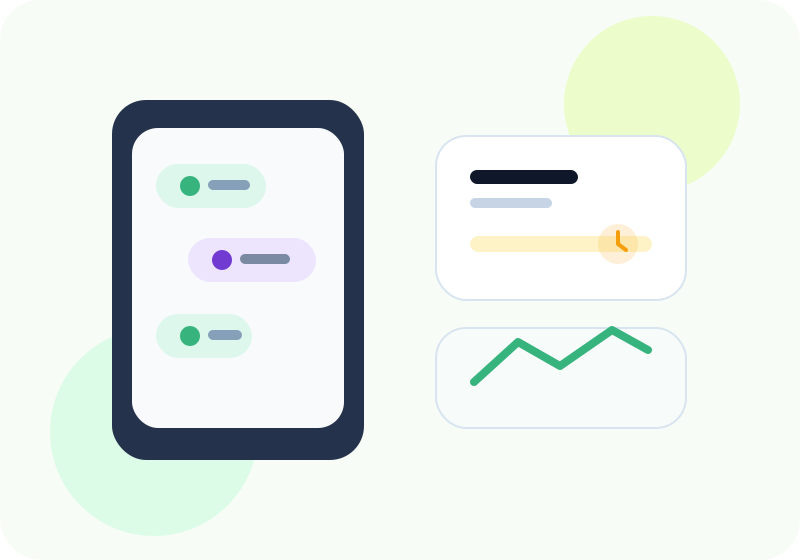
Reminders keyed to the due date, so they fire without anyone remembering
Polite overdue invoice email
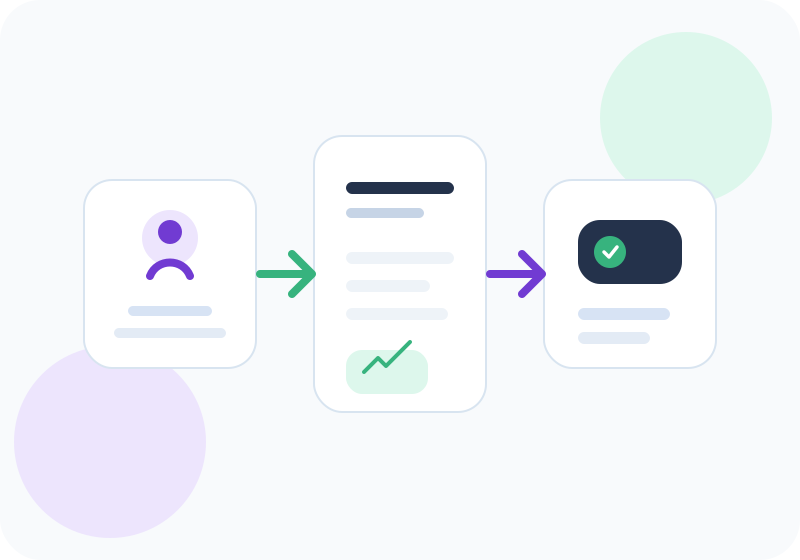
A useful payment reminder software should help you move from question to usable message quickly. Start with the business context, recipient details where relevant, dates, amounts, taxes, terms, and the next action. For everyday work, this keeps payment reminder software clear enough for freelancers, agencies, consultants, and small teams without rebuilding the workflow every time.
| What to check | Why it matters | InvoiceGennie flow |
|---|---|---|
| Reminder context | Invoice number, amount, due date, and tone keep follow-ups specific. | Generate a ready-to-copy message and adjust the tone before sending. |
| Review fields | Correct identity, amount, and tax details avoid back-and-forth later. | Use related tools and examples to keep the next step consistent. |
| Workflow next step | One-off documents are useful, but tracking matters once volume grows. | Move to the dashboard when you need saved records and follow-ups. |
In 2026, buyers expect billing workflows to be fast, readable, mobile-friendly, and easy to revise. Polite overdue invoice email If you use this payment reminder software once, keep the output simple. If you repeat the same workflow every week, save clients, standardize terms, and track follow-ups in one workspace.
The fastest path is to use the payment reminder software above, copy the message, and move into InvoiceGennie when you need saved clients, reminders, payment tracking, and cleaner billing records.
Every collections tool will chase an unpaid invoice. The one that matters is whether it knows to stop. A client who paid on Tuesday and receives an overdue notice on Wednesday learns that your records are unreliable, and the next genuine reminder carries less weight.
This makes payment recording part of the reminder system rather than an adjacent task. Where reminders read from one source and payments are recorded in another, the gap between them is measured in embarrassing emails.
The instinct when an invoice ages is to send the same message more often and more firmly. What works better is changing the message\u2019s shape: a reminder at day 3 that assumes an oversight, a query at day 14 that asks whether something is blocking approval, and a formal notice at day 45 that names the terms.
Each rung serves a different purpose. The early ones remove friction, the middle one surfaces a real problem — often that the invoice never reached finance — and the last one establishes a record. A tool with a single template can only do one of the three.
Before the due date, not after. A short note three days ahead reads as helpful and gets invoices into a payment run; the first post-due message already carries a small accusation. For most B2B terms, a pre-due nudge plus day 3, day 14 and day 30 after covers it.
Inconsistent ones do. Chasing one client and not another, or chasing someone who already paid, reads as disorganised or unfair. Automated reminders on a fixed schedule are usually received better than ad-hoc human ones, because they are visibly systematic rather than personal.
For most SME B2B relationships, yes, and it substantially outperforms email on response. The judgement is tone and timing rather than channel — the same message that works in an email at 11am reads as pressure on WhatsApp at 9pm.
The reminder trail becomes the evidence. A documented sequence of polite contact over 60 or 90 days is what supports a formal demand, and it is the reason the log matters more than the templates.
If you are still comparing tools, create one invoice, quote, receipt, or reminder first. A real document test reveals workflow fit faster than a feature list.
Create free invoiceUse these linked tools to complete your billing and collections workflow.
Tool
Use InvoiceGennie free invoice generator to create invoice PDF online. Add GST, HSN or SAC, UPI QR, logo, client details, and download without signup.
Tool
Create GST invoices online with CGST, SGST, or IGST-ready totals, GSTIN fields, HSN or SAC-friendly lines, and downloadable PDF output for India billing.
Tool
Create professional payment reminder messages with invoice details, due date, and outstanding amount.
Practical guides that help teams execute invoicing and accounting workflows faster.
Guide
Learn how to create a professional invoice with GST, payment terms, and due dates using a simple step-by-step framework.
Guide
Understand invoice vs bill differences, when to use each term, and how payment workflows change in B2B operations.
Guide
See a practical GST invoice example with required fields, tax breakup, and formatting tips for Indian businesses.
Browse professional invoice, receipt and credit note templates.
Client-retainer and milestone invoice examples for agencies.
Structure winning quotes with terms, taxes and validity.
Use proforma formats before goods dispatch or project kick-off.
See how to bill retainers with period coverage, scope summary, and payment terms.
Learn the billing structure Indian service teams use for GST-ready invoices.
Create the document you need now, then use related formats and reminders to complete the billing workflow.